CROATOAN: The True Story of Roanoke’s Lost Colony — America’s Greatest Mystery
The Moment a Governor Lost an Entire Colony
Imagine returning home after three years away and finding nothing. Not ruins. Not graves. Not any sign that 117 human beings — men, women, children, your own daughter and granddaughter among them — had ever lived there at all.
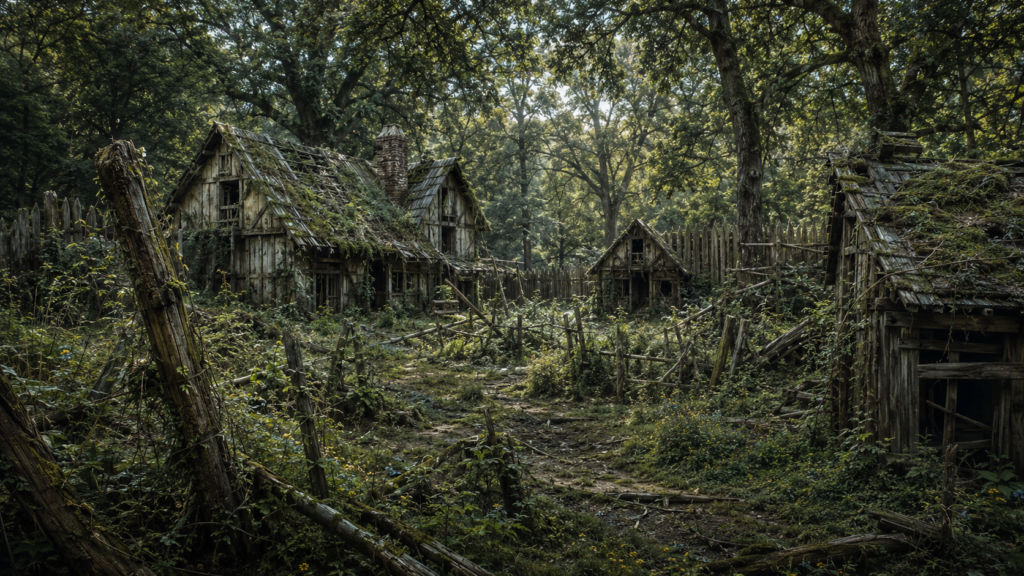
That is exactly what Governor John White faced when he stepped ashore on Roanoke Island, North Carolina, in August of 1590. The settlement he had built and then reluctantly left behind was gone. The wooden structures had been dismantled. The ground was overgrown. The silence was absolute.
Then he found the carving.
On a fence post near the entrance of the abandoned settlement, someone had carved a single word into the wood:
CROATOAN
On a nearby tree, just three letters:
CRO
No bodies. No blood. No signs of struggle. No distress signal. Just a word — and 117 people who had completely, impossibly, vanished from the face of the earth.
America’s oldest unsolved mystery had begun.
The Dream That Sent 117 People Into the Unknown
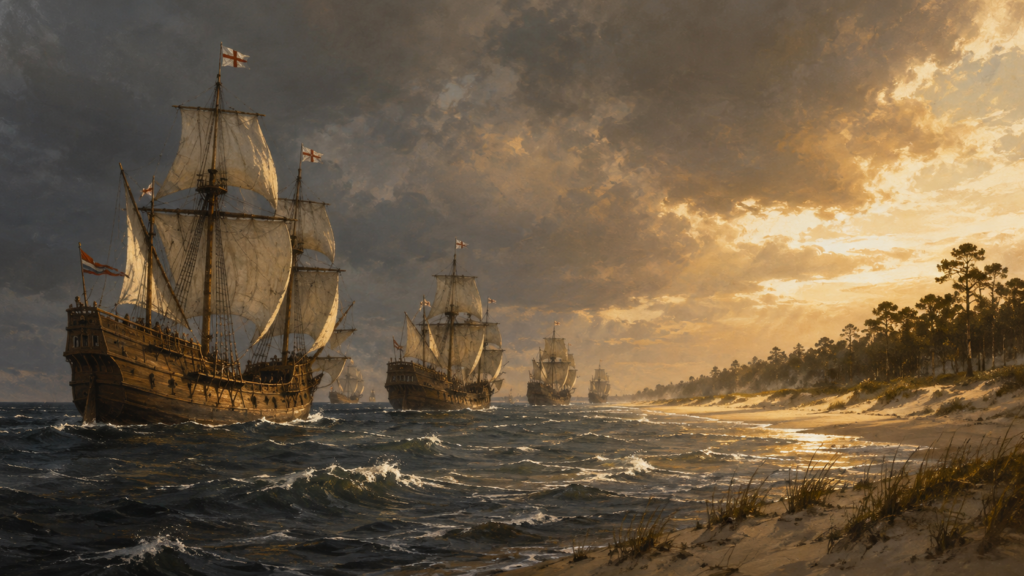
To understand what happened at Roanoke, you have to understand the world that sent those colonists there in the first place.
It was 1587. England was locked in a fierce competition with Spain for dominance of the New World. Sir Walter Raleigh, one of the most ambitious men in Queen Elizabeth I’s court, had already tried — and failed — to plant an English colony on Roanoke Island off the coast of what is now North Carolina. The first attempt in 1585 had collapsed. The men left behind struggled against hunger, hostile relations with some Indigenous tribes, and a complete lack of the agricultural knowledge needed to survive.
But Raleigh was not a man who accepted failure.
He organized a second expedition. This time, it would not be a military outpost. It would be a real colony — families, craftsmen, farmers, a true English town transplanted to the New World. Governor John White led the group: 117 men, women, and children who crossed the Atlantic with dreams of a new life. Among them was White’s own daughter, Eleanor, who was pregnant.
On August 18, 1587 — just weeks after landing — Eleanor gave birth to a daughter. She was named Virginia Dare: the first English child born in the Americas. It should have been a moment of pure triumph.
Instead, it was the beginning of a disaster that history has never fully explained.
The Three-Year Wait That Changed Everything
From the moment they arrived, the Roanoke colonists were in trouble. Their relationship with some of the neighboring Secotan tribe had been poisoned by a violent incident involving the earlier settlers. Supplies were dwindling faster than expected. The colony needed help — and it needed it urgently.
Governor White made a decision that would haunt him for the rest of his life. He would sail back to England personally to secure additional supplies and reinforcements.
He left in late 1587, promising to return within months.
He did not return for three years.
The reason was beyond White’s control. England was at war with Spain. The 1588 Spanish Armada crisis locked every available English ship into military service. Queen Elizabeth I forbade vessels from leaving for the New World. White tried everything — pulling every string he had — but he was trapped. Back on Roanoke Island, 117 people were waiting with no way to know why their governor had not come.
When White finally managed to return in August 1590, he brought relief supplies, fresh hope, and a father’s desperate need to see his daughter and meet the granddaughter he had never held.
He found nothing but silence, an overgrown settlement, and a word carved in wood.
What the Clues Actually Told Us
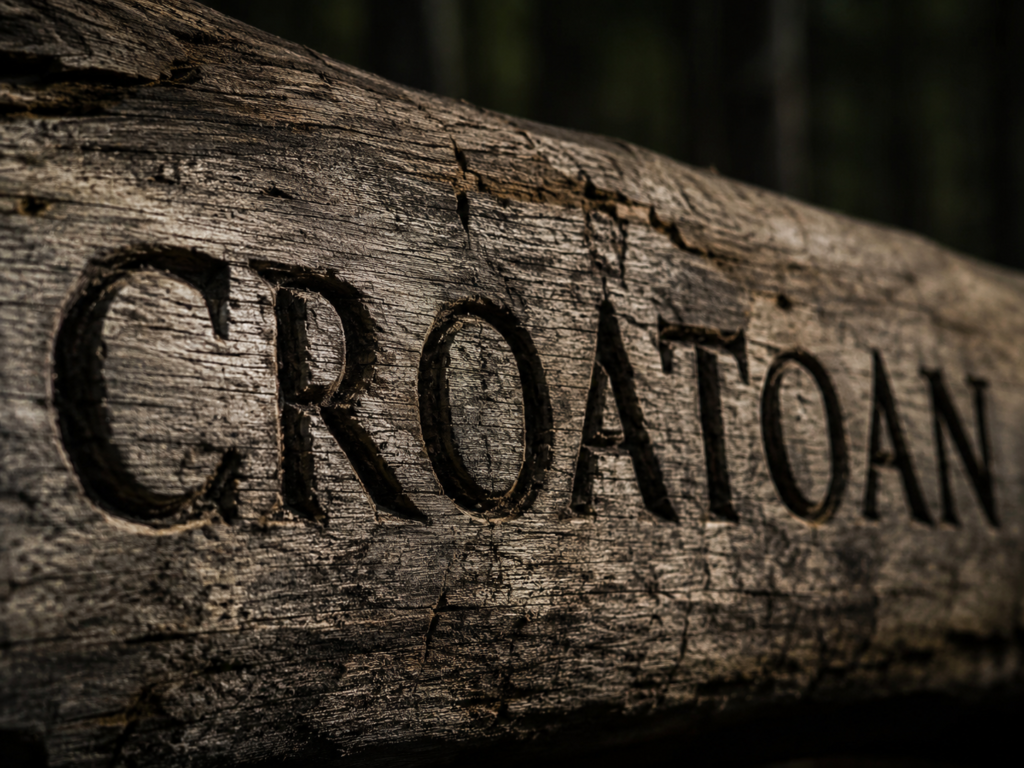
For centuries, historians painted the word CROATOAN as something sinister — an inexplicable cry from the void. But John White himself did not see it that way at first.
Before he left in 1587, White and the colonists had agreed on a specific plan. If the settlers needed to abandon Roanoke for any reason, they would carve their destination into a tree or post. If they were leaving under duress — under attack, in danger — they would add a Maltese cross beside the name.
There was no cross.
To White, the carving was not a cry for help. It was a message: We have gone to Croatoan. Croatoan was the name of a nearby island — present-day Hatteras Island, about 50 miles south — and the home of the Croatoan people, an Indigenous tribe who had been consistently friendly toward the English. The colony even had a Croatoan man named Manteo living among them, serving as a translator and intermediary.
White was desperate to sail south immediately and search Croatoan Island for his family. But a violent storm hit, then a second. His ships were badly damaged and the crew refused to risk Hatteras in worsening weather. Critically low on supplies, White was forced — against every instinct — to sail back toward England.
He never returned to Roanoke. He never found his daughter. He never found Virginia Dare.
In a letter written late in his life, White expressed his grief plainly. He had placed his family in a land of strangers, sailed away to save them, and never saw them again. The fate of the people he loved most in the world remained entirely unknown.
That is the human core of the Roanoke mystery. Not just a historical puzzle — but a father’s unanswered question echoing across four centuries.
The Theories: Where Did They Go?
For over 430 years, historians, archaeologists, and storytellers have offered competing answers to that question. Here are the most credible theories — and what we actually know about each.
Theory 1: They Integrated with the Croatoan People
This is the oldest theory and, as it turns out, the most likely. The carving itself points directly to the Croatoan people on Hatteras Island. Archaeologists have since found multiple pieces of English-origin artifacts buried in Croatoan archaeological sites on Hatteras Island, including metal tools and objects that could only have come from English settlers. Oral traditions among the Lumbee people of North Carolina, who claim partial descent from the Roanoke colonists, have long maintained that the two groups merged. Certain Lumbee family surnames match names from the original 1587 colony roster.
What the evidence says: Strong. The Croatoan were friendly, knew the colonists, and the island was clearly the intended destination.
Theory 2: They Moved Inland to Live Among the Algonquian Tribes
In 2012, researchers examining a map painted by John White — housed in the British Museum in London — made a remarkable discovery. Beneath a patch applied to the map, hidden in what appeared to be invisible ink, was the outline of a fort symbol, located approximately 50 miles west of Roanoke, in the direction of the Chowan River and Salmon Creek in present-day Bertie County.
The colonists had told White before he left that they planned to move roughly 50 miles into the mainland. The hidden symbol on the map appeared to show precisely where they intended to go.
Subsequent excavations at two sites in Bertie County — known as Site X and Site Y — uncovered fragments of late 16th-century English pottery: cooking vessels and storage jars consistent with domestic use rather than trade goods. Metallurgical waste from blacksmithing was also found, suggesting the colonists were actively working and living at these sites. Some archaeologists believe a group of survivors settled here and eventually assimilated into the local Indigenous communities.
What the evidence says: Compelling and growing stronger with each excavation.
Theory 3: The Colony Split Into Multiple Groups
By 2020, the leading scholarly position had shifted toward a more nuanced answer: the colony did not go anywhere as a single group. It splintered.
“Possibly, a small group went to Croatoan Island in the fall or winter of 1587 to wait for John White to return, while the remainder moved inland,” said James Horn, then-president of the Jamestown Rediscovery Foundation and a First Colony Foundation board member.
This theory reconciles the carved word CROATOAN (explaining those who went south) with the inland pottery finds (explaining those who went west). It also makes human sense. With no governor, dwindling supplies, and no certainty of rescue, different families may have made different choices about where safety lay.
What the evidence says: Currently the most widely accepted scholarly interpretation.
Theory 4: They Were Killed
Some historians have argued for a darker outcome — that the settlers were massacred by hostile tribes or even by Spanish forces moving north from Florida. In 1607, Powhatan — the powerful chief of the Chesapeake confederation — reportedly told English settlers that he had destroyed a group of people who had been living peacefully with another tribe for approximately 20 years. That timeline fits the Roanoke colonists precisely.
However, no mass graves, no evidence of battle, and no eyewitness accounts have ever surfaced to confirm this. The lack of a distress cross on the Roanoke carving argues strongly against a violent end — at least for the majority of the colonists.
What the evidence says: Possible for some individuals, unlikely as the complete explanation.
What Archaeologists Are Finding Right Now
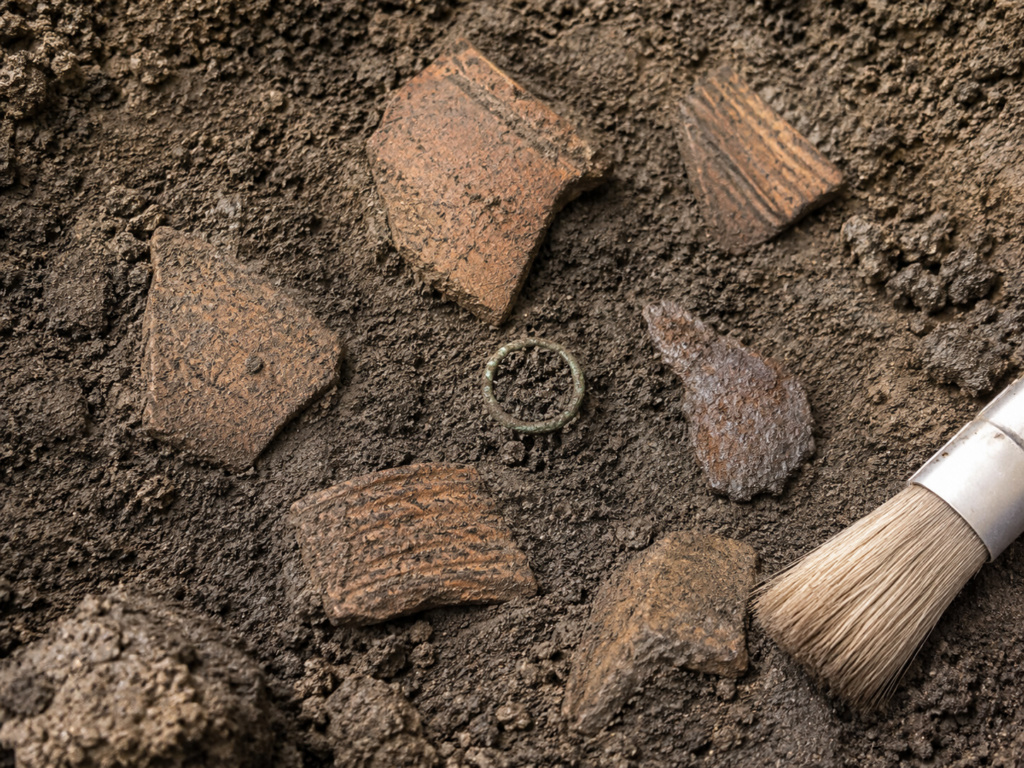
The mystery of Roanoke is not frozen in 1590. It is an active investigation, and recent years have brought remarkable discoveries.
In the summer of 2023, archaeologists with the First Colony Foundation were excavating a site at the Elizabethan Gardens in Manteo, North Carolina — the location of the Algonquian village of Roanoke, the Indigenous settlement that had hosted the early English explorers in 1584. There, they found fragments of Algonquian pottery dating to the 1500s and — more intriguingly — a small ring made of drawn copper wire. The ring was likely worn as an earring by an Indigenous warrior. But here is the significant detail: the Indigenous peoples of the region did not have the technology to produce such rounded strands of wire. The copper had to have been brought to North America by English settlers, almost certainly as a trade item. For the Algonquian people, copper carried deep spiritual significance — far exceeding its value to the English, who prized gold and silver instead.
In 2024, excavations continued at both the Elizabethan Gardens site and Fort Raleigh National Historic Site, with archaeologists recovering additional charcoal, pottery shards, and structural evidence consistent with a palisaded Algonquian village — and further signs of English-Indigenous contact at the same location.
First Colony Foundation also revisited Site Y in Bertie County, reporting additional 16th-century English ceramics that bolster the inland-relocation theory.
The picture emerging from all of this work is not a single dramatic vanishing. It is something quieter and far more human: a group of frightened, resourceful people making desperate decisions to survive — and ultimately, it appears, succeeding in a way history almost erased.
Visiting Roanoke Island Today
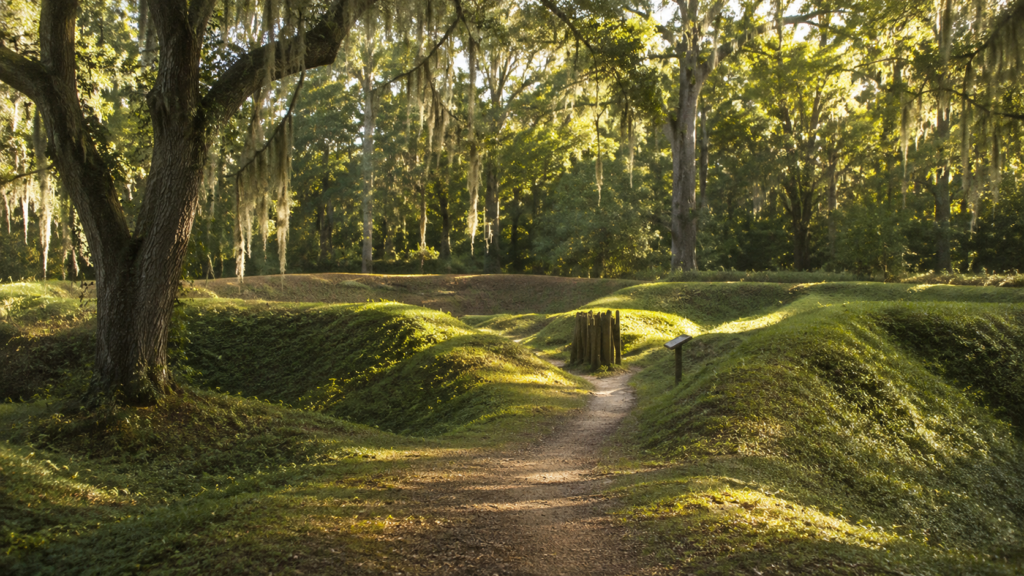
The place where America’s greatest mystery began is still there — and it is one of the most historically atmospheric destinations on the East Coast.
Fort Raleigh National Historic Site, located on Roanoke Island in Manteo, North Carolina, preserves the general area of the 1587 settlement. The park includes a reconstructed earthwork fort, a visitor center with interpretive exhibits, and walking trails through the quiet, moss-draped woods where the colonists once lived. Admission is free.
Adjacent to Fort Raleigh, the Elizabethan Gardens offer four acres of formal gardens designed in the style of the 1500s — the same era the colonists knew. The gardens are hauntingly beautiful and, thanks to recent archaeological digs on the grounds, are now also an active historical investigation site.
Each summer since 1937, the Lost Colony outdoor drama has been performed at the Waterside Theatre on Roanoke Island — one of the longest-running outdoor dramas in American history. The production brings the story of the 1587 colonists to life under the open sky, just steps from where those colonists actually lived. Performances run from late May through August.
The nearest city is Manteo, NC, with hotels, restaurants, and ferry access. The Outer Banks offers some of the most dramatic coastline in America — wild, windswept, and thick with history.
Best time to visit: Late spring through early fall. Summers allow access to The Lost Colony drama. Fall brings quieter crowds and extraordinary light along the coast.
When John White carved his own grief into history — writing of the family he never found, the colony he never reached again — he could not have imagined that four centuries later, people would still be standing in the woods of North Carolina, still asking the same questions.
What happened to Virginia Dare, the first English child born on American soil? What happened to Eleanor White, who gave birth in a strange land while her father sailed away? What happened to the 115 other souls who came to this island with nothing but hope and English determination?
The answer is emerging slowly, piece by piece, from the soil of the Outer Banks. And the answer, it turns out, is not as dark as four centuries of mystery have led us to believe. These people were not slaughtered. They were not swallowed by wilderness.
They did what humans have always done when survival demands it: they adapted. They found common ground with people whose land they had arrived on uninvited. They traded copper for belonging. They merged two worlds into something new.
The Lost Colony of Roanoke was not really lost. It was transformed — into something America had never seen before and has never quite stopped being: a people made of many peoples, finding a way to survive together in an unpredictable land.
The word CROATOAN was not a cry of despair. It was an address.
After all this time, we are finally learning to read it.