Glass Beach For sixty-one years, the people of Fort Bragg threw their garbage straight off a cliff into the Pacific Ocean. Old bottles, broken dishes, dead appliances, even cars — all of it went over the edge, piling up on the rocks below in a stinking heap locals just called “the dumps.”
Today, that same stretch of California coastline is one of the most photographed beaches in America. Not despite the trash. Because of it.
A Town Dump With No Other Option
Fort Bragg sits on California’s rugged Mendocino Coast, a few hours north of San Francisco, and in the early 1900s it had a problem every coastal town eventually faced: nowhere to put its garbage. There was no curbside pickup, no landfill, no trucks hauling waste out of town. So the city did what dozens of seaside communities did at the time — it pushed everything over the bluffs and let the ocean deal with it.
The dumping started in 1906, the same year a massive earthquake leveled much of San Francisco and sent shockwaves up the coast, destroying buildings in Fort Bragg too. The debris from that destruction had to go somewhere, and the cliffs west of town became the answer. When the first site filled up by 1943, the city simply moved a little further down the coast and started a second pile. That one filled by 1949, so they moved again, dumping at a third site until 1967 — the year California finally banned ocean dumping for good.
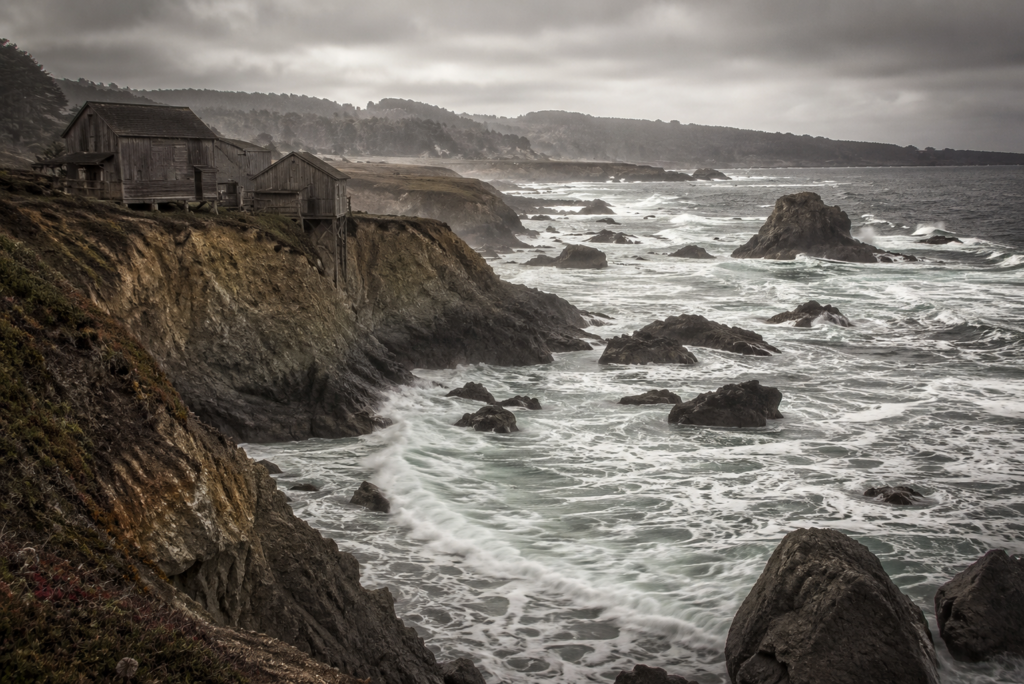
For over six decades, this was normal. Residents tossed appliances, car parts, and glass bottles by the truckload. When the pile got too big, someone would set it on fire to shrink it down. Nobody was thinking about what it would look like in a hundred years. They were just trying to get rid of their trash.
The Pacific Did What No Cleanup Crew Could
When the dumping finally stopped, state water officials ordered the area cleaned up. Crews hauled away what they could — the rusted cars, the broken refrigerators, anything large enough to carry. But millions of small glass shards were impossible to fully remove. They’d worked their way into the sand, the rocks, the tide pools. So the glass stayed.
And the ocean got to work.
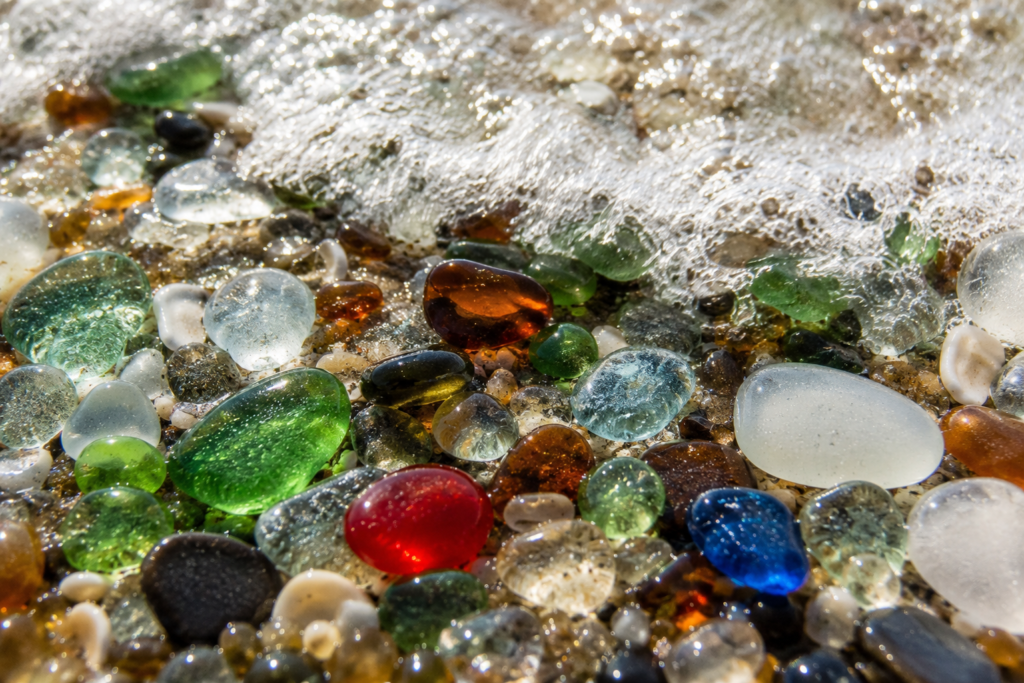
For decades, the same waves that once buried this glass in muck instead spent their energy grinding it down — tumbling each fragment against sand and rock millions of times a day, year after year, until every sharp edge disappeared. What started as broken bottle glass came out the other side looking like sea-worn jewels: smooth, frosted, and rounded into something closer to candy than trash.
Walk the beach today and the colors tell their own quiet history. Clear, green, and brown pieces are the most common — leftovers from ordinary soda and beer bottles. Soft blue and lavender chunks usually trace back to old medicine bottles, the lavender tint actually caused by sunlight reacting with manganese in antique glass formulas nobody uses anymore. The rarest find is red — usually a fragment of an old car taillight that took a one-way trip off the cliff sometime before 1967.
Three Beaches, Not One
Most visitors assume there’s a single Glass Beach. There are actually three, each representing a different decade of dumping. The main beach — the one with the parking lot and the easy path most tourists find — was the final dump site, used from 1949 until the ban in 1967. It’s also, ironically, the one with the least glass left, since it’s been picked over by visitors for years.
The older two sites hold more. A coastal trail built along the bluffs now connects all three, but the first dump site, used from 1906 to 1943, sits the furthest out and sees the fewest visitors of all. It’s also where the oldest glass tends to wash up — fragments more than a century old, smoothed by longer than anyone living today has been alive.
In 2002, California’s state park system bought the main beach and folded it into MacKerricher State Park, which is the reason it’s protected today. Taking glass from the beach is illegal now, enforced specifically because decades of souvenir hunters had already stripped large sections nearly bare. If you want to take a piece of sea glass home, the only legal way is to buy it — both from independent sellers in town and from a small museum a few blocks away that exists almost entirely because of what this beach used to be.
The Museum Built From the Beach’s Own Trash
A few minutes from the beach, on Fort Bragg’s Main Street, sits the world’s only museum dedicated entirely to sea glass. It was founded by a retired deep-sea ship captain who spent years walking these exact beaches collecting pieces, eventually amassing more than 150,000 of them — one of the largest sea glass collections anywhere. The museum displays its best finds organized by color, with explanations of what each piece used to be before the ocean got hold of it.
Admission is free, and it makes for a natural stop either before or after visiting the beach itself, especially since the museum staff can point visitors toward where the less-picked-over glass still washes up.
Visiting Glass Beach
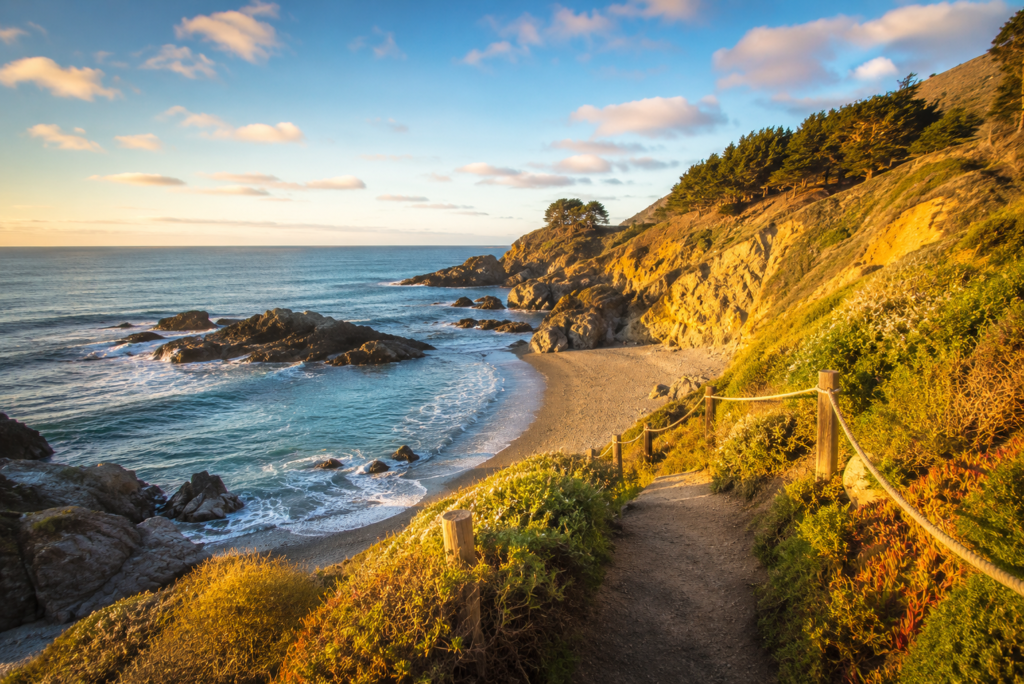
Glass Beach is located within MacKerricher State Park, at the end of West Elm Street in Fort Bragg. It’s open daily, free to enter, and there are no facilities directly on the beach, so plan accordingly. Low tide is the best time to visit — more glass is exposed, and the tide pools between the rocks are easier to explore safely.
It is, by any measure, an unlikely place. A beach built from a hundred years of garbage that nature quietly turned into something worth driving hours to see. Nobody who stood here in 1950, watching trucks dump trash over the edge, could have guessed that six decades of ocean waves would turn their mess into one of California’s strangest, most beautiful coastlines.